Sep. 30, 2026
PALTAC's Challenge — "Implementation-Oriented" Research and Development with an Eye Toward Next-Generation Logistics —
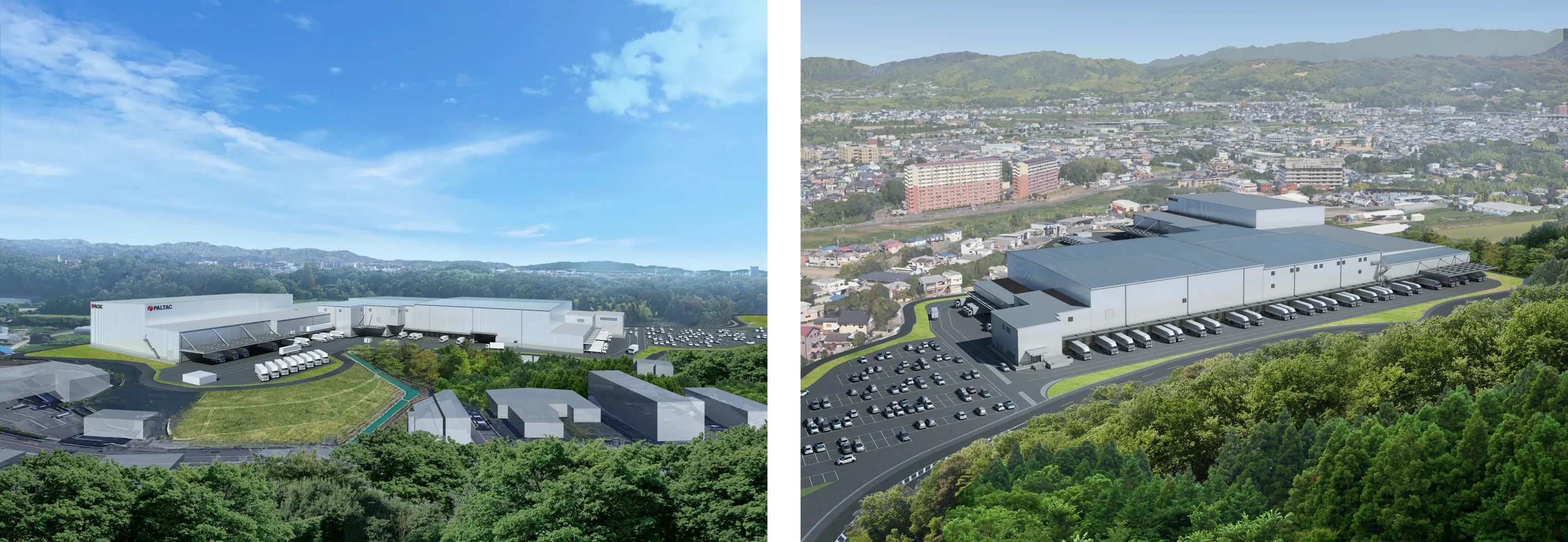
With a focus on solving challenges in the logistics field and adapting to future environmental changes, PALTAC is conducting research and validation of forward-looking logistics systems and technologies, and is working to apply these findings to the operation of next-generation distribution centers.
We are advancing two parallel initiatives: assessing the potential of innovative technologies and integrating them into actual logistics operations and distribution center management. On one hand, we develop and validate new technologies and core components; on the other, we translate these results into concrete frameworks, systems, and equipment, conducting R&D that leads directly to practical implementation.
Our goal is not merely to introduce cutting-edge technology; rather, to continue supporting the foundations of our business activities—stable supply, quality improvement, and sustainability—we are systematically reevaluating every aspect of logistics and pursuing the creation of better systems.
We are working on developing a system that calculates optimal inventory placement and shipping sequences based on a vast amount of shipping data. By doing so, we aim to achieve efficient distribution center operations by controlling the movements of equipment and personnel and eliminating “downtime” for both robots and people.
We are rolling out “SPAID,” a logistics model that seamlessly integrates AI and robotics, to reduce the burden on workers by automating physically demanding tasks. We are currently working to build a logistics infrastructure capable of adapting to future environmental changes—such as labor shortages—that boasts productivity twice that of the conventional SPAID model.
We are utilizing a simulator that recreates the site as a digital twin to visualize the operational status of our existing distribution center and explore ways to improve it. Furthermore, moving forward, as we construct new centers and install equipment, we plan to simulate the movement of equipment and personnel in advance to determine the optimal number of units required, thereby optimizing our investment and aiming for center operations that ensure stable performance.
We are conducting research aimed at achieving overall optimization by leveraging the vast amounts of data generated throughout the supply chain—from manufacturers to retailers—as well as detailed data on the movement of equipment and merchandise within distribution centers. By transforming this data into valuable insights and pursuing efficient delivery, inventory management, and distribution center operations, we aim to contribute to the optimization of the entire supply chain.
Our strengths lie in our “deep understanding of on-site operations” "and “practical operational know-how,” cultivated through collaboration across departmental boundaries. We do not view the mere adoption of new technologies as an end in itself; rather, we consistently prioritize whether those technologies will lead to solutions for on-site challenges. By fostering close collaboration among our internal departments and designing logistics from a perspective of overall optimization, we will build an efficient and sustainable logistics model that provides peace of mind to all our business partners.